

The Throwing Project: 6-Week Progress Report

For those who have been following along this Spring, I currently find myself swept up with the art and science of pitcher development including participating in my own throwing program.
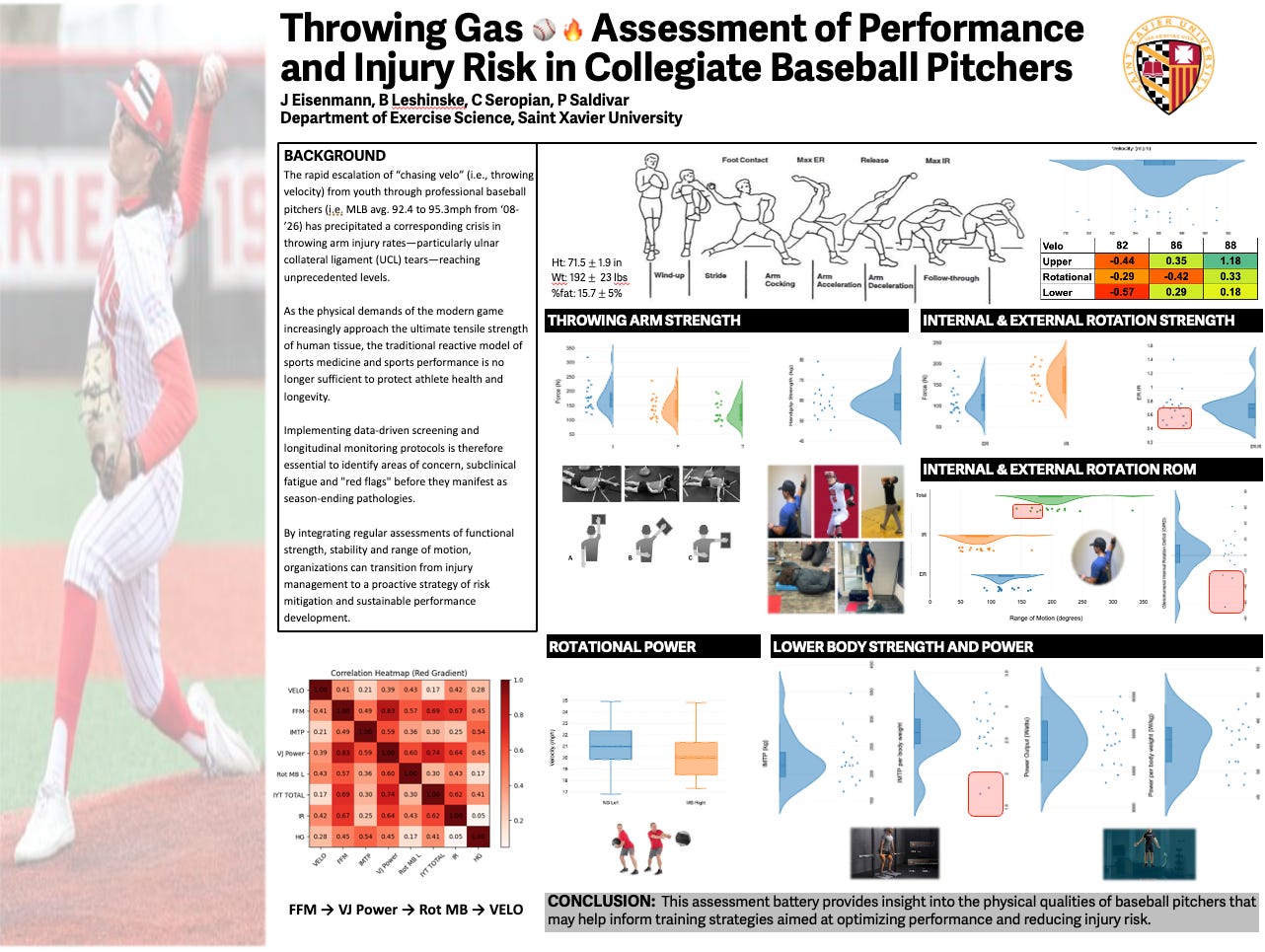
This all started this past Fall when the pitching coach at the university approached me with some concerns about the strength and conditioning program, but it ramped up in February as the 2026 college baseball season began and we implemented our pitcher-specific monitoring program. In previous years, we had conducted countermovement jumps (CMJ) and handgrip measures in pitchers and position players as part of the monitoring and readiness testing - but started this year including additional range of motion testing as part of weekly assessments plus periodic evaluations that include ASH (IYT) test and bilateral and unilateral CMJ on force plates plus internal and external shoulder rotational strength along with lower body strength and power and rotational power.
Unhittable
As they say, timing is everything. Six weeks ago (4/6/2026), I started reading Unhittable: Baseball’s New Era of Pitching Dominance by Rob Friedman (aka the Pitching Ninja). For the first week or so, I mowed through several chapters and penned a few summaries based on my reading.

The Pillars of Pitching Performance: Functional Strength & Conditioning, Biomechanics, and Recovery


The Throwing Project
This “summer read” coincided with the start of my own throwing program as a way to continue learning and gaining expertise in pitching development and performance. I set a lofty goal of throwing 80 mph (while staying healthy and injury free) by August.
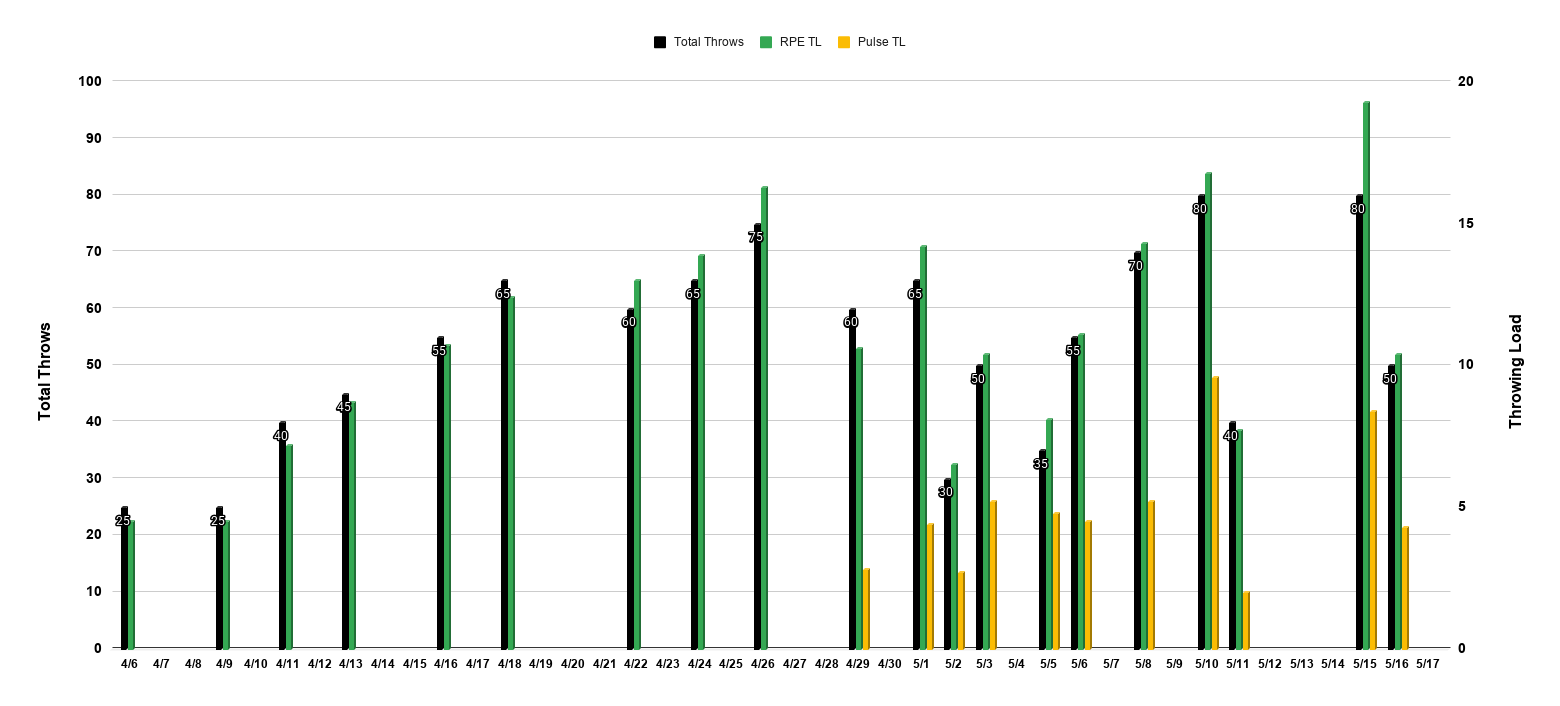
For the early phase of the program (return to throw after a long layoff), I adapted a published interval throwing program. Each session usually consists of sets of 10-30 throws at 50-100% of perceived maximal effort with the total throw count ranging from 30-80 per session. Below is a graph of the progression of daily sessions showing total throws (black bars, left Y-axis) and the Throwing Load calculated from the RPE-based approach and PULSE sensor (green and yellow bars, right Y-axis).
I also include arm care (essentially Thrower’s Ten), resistance training (focusing on lower body), conditioning, and mobility throughout the week.
Accuracy of RPE-based Throwing Workload
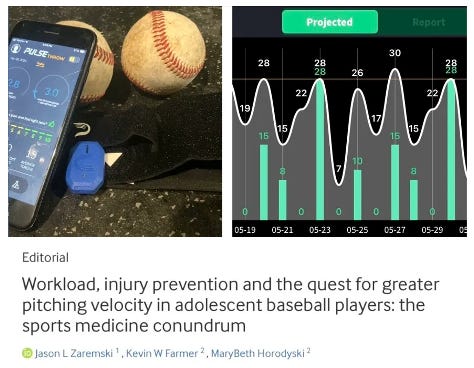
As mentioned above and shown in the graph, I have been tracking throwing workload using a self-reported RPE-based approach from the original Kinetic Pro app, and as of the third week (4/29/2026) of the program wearing the PULSE (formerly MOTUS) sensor from Driveline. My interest in this project is to demonstrate the accuracy and the feasibility of a RPE-based scale that has wide-scale application.
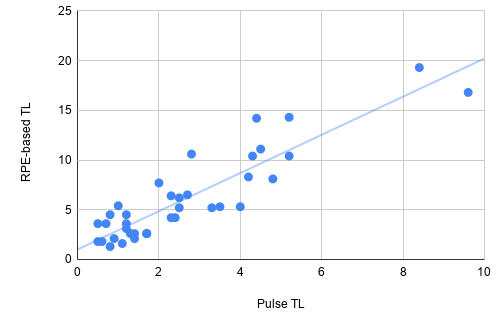
The data shown in the graph below represents both individual sets (i.e., 10 throws at 70%, 25 throws at 90%, etc. and full sessions). Overall, the correlation between the self-reported RPE throwing workload and the PULSE sensor is 0.899, which is quite strong. Of course, there is some variability (scatter) but the preliminary results suggest that a self-reported RPE-based throwing workload score is a feasible and accurate approach to monitoring throwing workload - at least in a experienced, knowledgeable adult.
As more data is collected over the summer, I will share and also provide greater details and insights. We also have plans to conduct a full study in the Fall. Given the epidemic of throwing arm injuries, this is a very important issue to address. As Casey Mulholland says “every throw matters”.
Assessment of Arm Health
As mentioned above, we have been conducting assessments and monitoring of pitcher health and readiness in a NAIA team. As part of this work, we have also been thinking about reliable, valid and feasible test batteries. For example, the ASH test using force plate technology is great - but not feasible for many coaches and programs. However, a classic handgrip dynamometer or general handheld dynamometer + inclinometer can be used to assess strength and range of motion in the field.
Initially, this was our approach using standard handgrip dynamometer and the Output Capture sensor. We have also conducted some pilot testing using the Vald Dynamo for the ASH and IR and ER strength measures including varying position (i.e. prone, half-kneeling 90/90 arm position). Data coming soon …..
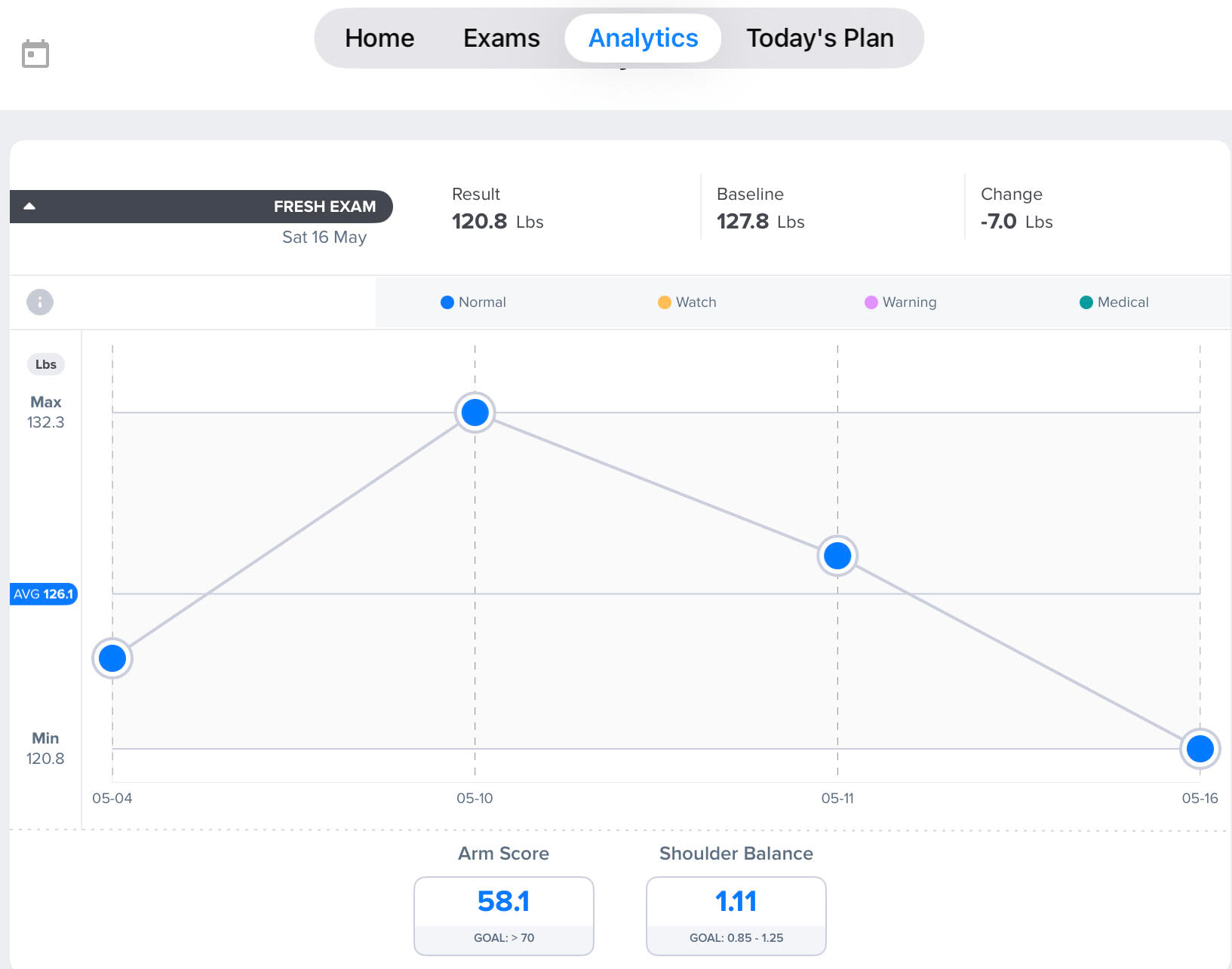
This interest in assessment of arm health - alongside throwing workload - has also led us to the Armcare.com app that utilizes the Activforce dynamometer and inclinometer, and I have personally being using it since early May. The assessment can be completed in less than 5-minutes and includes IR and ER range of motion, IR and ER strength plus scaption and pinch grip strength. The four strength measures are totaled to create the Arm Score, which is indexed to body mass (i.e., relative strength). The Shoulder Balance score is the ER:IR ratio comparing the “breaks” to the “accelerator”. A Strength:Velocity ratio is also provided. There are also several other facets of the app including a throwing program that is adjusted based on testing and warm-up and training programs.
Over the summer, I will be doing some in-house n=1 testing of the device and app based off some of the previous work described above. In the meantime, here is a published paper on The Reliability and Validity of the ArmCare Strength and Range of Motion Sensor and Mobile Application in Baseball Players.
Injury Report
Although my throwing arm has felt great the entire time, I did experience some groin soreness on my lead leg side in week 2. And then in week 5, I developed some significant discomfort/pain in my lower back, which I think resulted in some generalized pelvic musculature strain due to the rotational nature of throwing and bracing and rotating against the lead leg.
Continued Learning
Learning is best facilitated by education and experience. The experience of throwing (and training/lifting/conditioning/mobility) has been outlined above. The educational component has taken place during either my 1 hr 50 minute drive to Chicago or my Zone 2 cardio sessions when I listen to podcasts from the pitching gurus. This has included about 12 podcasts each from Armcare.com More than Velocity podcast and The Layback podcast plus a few others featuring renowned pitching biomechanics Dr. Glenn Fleiseg.
However, my greatest learnings have come from conversations (and collaboration) with Casey Mulholland, founder and lead developer at KineticPro. These exchanges largely focus on the intersection of high-performance sports technology, pitching mechanics, training and data interpretation. By merging academic frameworks with KineticPro's cutting-edge developmental tools and Casey’s insight as a pitcher-scientist, I’ve gained invaluable, real-world insights into what it truly takes to safeguard and optimize a throwing athlete's biological chassis. And of course, what underpins all of this work is my interest in how it impacts the growing and maturing youth athlete and pitcher - more to come here as well.
What’s Next? Weeks 7-12
The Throwing Program
Exposure to higher throwing loads
Long toss
Weighted ball cycle
Bullpen sessions
Continued work on related research projects
Assessment of Throwing Workload (adding radar gun technology)
Assessment of arm health using various tools and methods
Additional blogs and summaries from Unhittable including:
What is meant by ‘Functional Strength Training” for Pitchers
Lower Body Strength and Power in Throwing Athletes
Talent Identification in Baseball: Beyond Showcases - The Flatground App
New Project on Growth & Maturation of the Adolescent Pitcher